The Four Advantages of Offering Health and Wellness Benefits to Employees

According to recent reports, the nation’s unemployment rate is at a historic low. This is creating a new normal where corporate America’s job opening demands can outweigh the candidate supply. The fact is that for the first time in years, the nation’s multigenerational workforce is in the driver’s seat — and in my experience, health and medical benefits are weighted equally with salary requirements. This is why I tell small businesses looking to grow that it is critical they embrace health and wellness benefits to recruit and retain top talent.

It is safe to say salary will remain an important driver within the job seeker population. However, according to a recent Clutch study, over half of employees have said health insurance is the most important benefit that impacts their job satisfaction. Moreover, the Society for Human Resource Management has found that because of increased recruitment competition, “Organizations must leverage the benefits package they offer to their employees.”

Small businesses looking to remain competitive in the talent marketplace can do so by thoughtfully packaging medical, ancillary (extra medical services like dental or vision) and wellness benefits into plans that appeal to the needs of current and future employees. While this might seem like a daunting task, professionals in this space regularly guide employers to options that will meet their financial needs while also addressing employees’ (and their dependents’) wants.

Here are the top four advantages of offering health, ancillary and wellness benefits to employees:

• Benefits Outweigh Salary. Today’s employment market is forcing companies to embrace increasingly competitive salaries to attract the best workers. Nonetheless, this is not the only part of the equation — business owners who pair competitive salaries with robust employee benefits package offerings (e.g., medical insurance, along with vision and dental benefits) continue to attract more job applicants. The 2016 Aflac Workforce Reportfound that 60% of employees would take a job with lower pay but better benefits, while 16% said they had left a job or turned down a job in the prior 12 months due to the benefits offered. Additionally, 42% of employees said employers making improvements to their benefits would be something positive they could do to keep them in their jobs. Employers that offer strong benefits programs paired with competitive salaries will find it easier to recruit and retain employees.

• Engaged Employees Equal A Happy Workforce. Employees want to be part of an organization with purposeful direction. These are the individuals who make the best addition to any team. They play an instrumental role in keeping the workplace culture alive and thriving through regular interactions with coworkers and leadership. Successful organizations are built around employee feedback, ranging from specific medical benefits they find most valuable — and want — to causes the business should consider embracing to keep employees happy and engaged.

• Good Health Leads To Productivity. The American Institute for Stress finds workplace stress is one of the nation’s leading health challenges. This can negatively affect physical health, causing employees to stay home from work or come in and spread their germs in the office, while also decreasing efficiency. Strong medical, ancillary and wellness benefits help to keep a workforce healthy, reduce absenteeism and boost overall productivity. Moreover, providing health insurance to your team — and allowing employees to visit doctors when they are sick — is the right thing to do.

• Choice Is King. Gone are the days of the one-size-fits-all approach to health insurance and employee benefits. Today’s employees want to keep their doctors and access to hospitals and other wellness services within their communities. Plus, they often have different overall health and financial requirements as compared to their colleagues in different life phases.

Business owners, large and small, who build in the option for employees to customize specific elements of their benefits packages empower their team members with the ability to better manage and control their health. In my experience, this is an engaging proposition that benefits employers and employees alike.

Whether it is a new business just getting up and running or a seasoned company that has been in operation for many years, the advantages outweigh the risks when it comes to offering employee benefits. These benefits are integral in attracting and retaining the right employees, leading to new business opportunities that benefit everyone.

Informational Source

Insurance Job Titles and Descriptions

Insurance is a broad work category that includes several types of coverage’s, including life and health insurance, casualty insurers, insurance brokers, and more. The field encompasses many job titles.

This list can act as a starting point to research the responsibilities involved in specific insurance industry positions. You can then enter these job titles into the search field on job listing sites to find available openings.

Actuary Positions

Actuaries use analysis to predict the risk that an event will occur. They help insurance companies decide how much to charge for various types of coverages.

Actuaries typically work for insurance agencies and brokerages that sell the policies of several companies, but they might also work for particular insurance companies or even for the government. They often specialize in one type of coverage, such as health or property insurance.

Actuaries must be skilled in statistics and mathematics, and they must pass a series of tests. Job titles include actuarial analysts, specialists, associates, and managers.

Claims Adjusters

Claims adjusters work with customers who have experienced losses and are making claims. Also known as insurance examiners, analysts, specialists, appraisers, or investigators, claims adjusters must decide how much an insurance company should pay for a damage or loss.

They typically have to travel to meet with clients and to inspect properties for which claims are being made, and they must sometimes do research or seek expert opinions to determine how much a claim might be worth.

Claims Clerks

Insurance claims clerks deal with the paperwork related to insurance policies, and it can be a lot. They might process new policies, modify existing policies, and sometimes they even handle paperwork related to claim settlements. They’re also sometimes known as policy processing clerks.

Customer Service Representatives

Customer service representatives help customers with various questions and concerns about their policies. They might also take details from customers after their insured properties are damaged, communicating with them on the phone, online, or in person.

Loss Control Specialists

An ounce of prevention is worth a pound of cure, and prevention is the domain of a loss control specialist. She inspects businesses to provide strategies for reducing the risk of loss or damage. Also known as risk consultants, loss control specialists travel to various workplaces to note any potential hazards, then they report back to the insurance agency.

Sales Agents

An insurance sales agent contacts customers to sell them particular types of insurance. He explains policies and helps customers select policies, then maintains each client’s insurance records.

Most insurance sales agents work for insurance agencies and brokerages, although some work with particular insurance companies. The job typically takes place in an office, but agents sometimes have to travel to meet with clients.

Insurance Underwriters

An insurance underwriter decides whether someone seeking coverage should be provided with that insurance. The underwriter evaluates the application for risk and decides if the applicant meets certain criteria.

An underwriter might also help set prices for various insurance policies depending on the determined risk. Most underwriters work for insurance agencies and brokerages, although others might work for particular insurance companies. Underwriters tend to specialize in one area of coverage, such as auto insurance or life insurance.

Informational Source

Why Addiction Rehab is Covered by Most Health Insurance Plans

There are multiple paths to help those struggling with addiction receive treatment. Depending on the structure of the treatment program, in-patient treatment is likely the most expensive. For those with private or employer provided health insurance, that plan will likely have an addiction recovery payment requirement.

It’s The Law

Addiction rehab is covered under the Affordable Care Act. Specifically, treatment for addiction is covered under the Mental Health Parity and Addiction Equity Act, launched in 2014.

Depending on the structure of the insurance plan, some or all of the addiction treatment program will need to be covered by the health insurance program. State law can impact the required percentage of coverage, but as a general rule, insurance companies such as Blue Cross have benefit packages that should cover between 60% and 90% of the addiction treatment plan.

Addiction Treatment And Privacy Rights

Because addiction is a serious and possibly fatal medical condition, the ACA rules requiring coverage enable addicts in need of dedicated, in-house treatment the right to break away from the everyday life and focus on mental and physical healing. Addiction treatment facilities and programs are covered by the same privacy protections as any other medical treatment.

Time away for in-house addiction treatment can be covered by FMLA leave.

Benefits For Society

Substance abuse and addiction destroy marriages, damage family relationships and tear at the fabric of society. People who are married are less likely to develop dangerous addictions, but rates of substance abuse go up after divorce.

Benefits For Business

As noted above, alcohol and drug addiction can be fatal. In addition, the path to a fatal level of addiction can leave a lot of wreckage, including damage to relationships with family and friends and the utter destruction of a career.

Businesses both large and small are required to offer some form of FMLA, which can be used for in-house addiction treatment. As with insurance regulations, these FMLA rules can change from state to state.

Addiction and Mental Illness

Unfortunately, both addiction and mental health challenges are highly stigmatized. Those seeking disruptive mental health issues may not be willing to seek professional help and can find themselves self-medicating with legal and illegal mood-altering substances.

One of the challenges faced by those offering in-patient drug treatment is the unravelling of the combination of mental illness and addiction. If the patient is found to have a dual diagnosis, the treatment plan will need to be expanded and the patient may be referred for other treatment under the care of a psychiatrist.

Addiction and Incarceration

As with many health challenges, leaving addiction untreated early in the progression of the disease extracts a high price as the condition advances. In the case of a severely addicted person, withdrawal is a dangerous process that should be carefully monitored by medical professionals, and jail staff are often not trained in how to treat someone in the grip of withdrawal.

Additionally, prison as a method of addiction treatment is simply not effective. Nearly all imprisoned offenders will return to some form of substance abuse after prison. In an effort to either gain access to the drug or money for the drug, over half will commit new crimes.

Conclusion

Addiction is an illness that needs to come into the light of day as a serious health issue. By considering issues of both addiction and mental health as part of a healthy lifestyle rather than as shameful conditions to be shunned, our society can have an honest conversation about the pain of both of these conditions.

Informational Source

70% of Employers Offer Packaged Health, Dental, Pharmacy Benefits

Most employers are integrating health, dental, vision, pharmacy, and other benefits to improve outcomes and lower costs.

 Seventy-one percent of employers with 100 or more employees are either actively integrating or considering integrating their medical, dental, vision, and pharmacy benefits under their health and wellness programs in the next five years, according to a study commissioned by Anthem and conducted by TRC Insights.

Employee benefits are often soiled, the study authors noted, with medical, pharmacy, dental, vision, and other benefits offered through multiple carriers that often don’t interact. This can lead employers and providers to have a disconnected view of overall physical health, as well as their spending on different services.

Integrating benefits allows payers to share data with employers, so that employers can help guide employees to prevention strategies and care management programs.

“It’s clear that the impacts of employee health and benefits extend beyond the medical care costs,” said Nick Brecker, President of Anthem’s Specialty Business.

“Employees and employers are looking for solutions that connect medical care with pharmacy, dental, vision, disability and other benefits programs, so that employees can get the support they need to improve their overall wellbeing, satisfaction and productivity.”

To understand how employers are progressing with integrated healthcare, researchers conducted interviews with national, large, and small group employers.

National employers were defined as those operating in two or more states, while large employers were those with 100 or more employees operating in one state. Small employer groups were those with less than 100 employees.

The results showed that most employers are increasingly moving toward integrated benefits. More than half of large group employers reported that they are actively integrating their benefit packages, and 25 percent said they are considering it.

This is a significant increase from the 2016 version of the survey, when just 60 percent of employers were making moves towards creating more comprehensive benefit offerings.

National and large employer groups continue to lead the way with integration, the study found, with nearly half of interviewed national employers reporting that they are actively integrating their benefits.  Thirty-six percent of interviewed large groups said the same.

Dental and vision benefits are most likely to join traditional clinical care benefits, employers said. Sixty-nine percent said they were actively integrating vision, while 67 percent reported they were actively integrating dental.

Pharmacy and disability followed, with 65 percent saying they were actively integrating pharmacy into their medical benefits and 51 percent saying they were integrating disability.

While ease of administration and lower costs are still prominent motivations for integrating health benefits, employers’ reasons for integrated healthcare are beginning to change.

“There’s a noteworthy shift in employers’ mindsets,” the researchers said. “In previous years, companies that integrated were generally focused on the financial potential. Now they’re turning to integration not just for savings, but for happier workers.”

Eighty-eight percent of employers believe that integrated benefits make companies a place where people want to work, and 87 percent of respondents think employees who receive multiple benefits under a single insurer are healthier in the long run.

Additionally, researchers found that a growing number of employers don’t evaluate the success of their integrated health benefits programs by any standard measure, and reported that they implement these programs simply because it’s the right thing to do.

While this group accounts for a smaller percentage of employers (19 percent), the team pointed out that it is more than double the eight percent of employers who said the same in the 2016 survey.

Organizations also understand that offering integrated health benefits is essential to compete with other employers.

“Acknowledging that acquisition and retention of talent is essential, the consensus among employers in the national and large group sectors is that they have to offer more integrated health care to compete. Many in small groups share the view, but it isn’t quite as prevalent,” the researchers wrote.

Eighty-two percent of employers in the national sector and 86 percent in the large group category recognize that offering more strongly integrated benefits will help them compete with other employers, while just 65 percent in the small sector said the same.

The results demonstrate that integration is growing more common among employers as they increasingly recognize the benefits of integration for their employees.

“I’m encouraged that more and more employers are adopting this approach,” said Brecker. “By addressing ‘whole person health’ we can identify and communicate opportunities to positively impact employees’ health, provide them with a simplified experience and lower their health care costs.”

Going forward, employers will need to evaluate the needs of their employees and aim to meet those needs as best as they can.

“As integration has gained momentum, the need for innovation has become even more critical,” the researchers concluded.

“Employers need to look at what matters to their employees and what makes sense for their organization — and select products accordingly. With disability currently lagging behind pharmacy, vision and dental, for example, there is an opportunity to take advantage of this untapped potential in integrated healthcare offerings.”

Informational Source

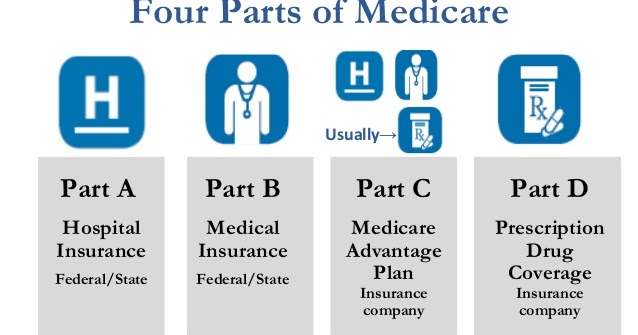
The parts of Medicare (A, B, C, D)

There are four parts of Medicare: Part A, Part B, Part C, and Part D.

  • Part A provides inpatient/hospital coverage.
  • Part B provides outpatient/medical coverage.
  • Part C offers an alternate way to receive your Medicare benefits (see below for more information).
  • Part D provides prescription drug coverage.

Generally, the different parts of Medicare help cover specific services. Most beneficiaries choose to receive their Parts A and B benefits through Original Medicare, the traditional fee-for-service program offered directly through the federal government. It is sometimes called Traditional Medicare or Fee-for-Service (FFS) Medicare. Under Original Medicare, the government pays directly for the health care services you receive. You can see any doctor and hospital that takes Medicare(and most do) anywhere in the country.

In Original Medicare:

  • You go directly to the doctor or hospital when you need care. You do not need to get prior permission/authorization from Medicare or your primary care doctor.
  • You are responsible for a monthly premium for Part B. Some also pay a premium for Part A.
  • You typically pay a coinsurance for each service you receive.
  • There are limits on the amounts that doctors and hospitals can charge for your care.

If you want prescription drug coverage with Original Medicare, in most cases you will need to actively choose and join a stand-alone Medicare private drug plan (PDP).

Unless you choose otherwise, you will have Original Medicare. Instead of Original Medicare, you can decide to get your Medicare benefits from a Medicare Advantage Plan, also called Part C or Medicare private health plan. Remember, you still have Medicare if you enroll in a Medicare Advantage Plan. This means that you must still pay your monthly Part B premium (and your Part A premium, if you have one). Each Medicare Advantage Plan must provide all Part A and Part B services covered by Original Medicare, but they can do so with different rules, costs, and restrictions that can affect how and when you receive care.

It is important to understand your Medicare coverage choices and to pick your coverage carefully. How you choose to get your benefits and who you get them from can affect your out-of-pocket costs and where you can get your care. For instance, in Original Medicare, you are covered to go to nearly all doctors and hospitals in the country. On the other hand, Medicare Advantage Plans typically have network restrictions, meaning that you will likely be more limited in your choice of doctors and hospitals. However, Medicare Advantage Plans can also provide additional benefits that Original Medicare does not cover, such as routine vision or dental care.

Informational Source

Facts About Medicare

Background on Medicare

Medicare is a federal health insurance program that pays for a variety of health care expenses. It’s administered by the Centers for Medicare & Medicaid Services (CMS), a division of the U.S. Department of Health & Human Services (HHS). Medicare beneficiaries are typically senior citizens aged 65 and older. Adults with certain approved medical conditions (such as Lou Gehrig’s disease) or qualifying permanent disabilities may also be eligible for Medicare benefits.

Similar to Social Security, Medicare is an entitlement program. Most U.S. citizens earn the right to enroll in Medicare by working and paying their taxes for a minimum required period. Even if you didn’t work long enough to be entitled to Medicare benefits, you may still be eligible to enroll, but you might have to pay more.

There are four different parts to the Medicare program. Parts A and B are often referred to as Original Medicare. Medicare Part C, or Medicare Advantage, is private health insurance, while Medicare Part D offers coverage for prescription drugs. The details below tell you more about Medicare insurance plans, with an overview of the four parts.

Shop Medicare plans

The “parts” of Medicare

The types of Medicare programs are often referred to as Part A, Part B, Part C, and Part D. Here’s a rundown of what each “Part” is about.

Medicare Part A

Medicare Part A is hospital insurance. Part A covers inpatient hospital care, limited time in a skilled nursing care facility, limited home health care services, and hospice care.

Most Medicare Part A beneficiaries don’t have to pay a monthly premium to receive coverage under this part of Original Medicare; this is called “premium-free Part A.” Generally, if you’ve worked at least 10 years (40 quarters) and paid Medicare taxes while you worked, you’re eligible for premium-free Part A. Otherwise, you pay a monthly premium.

Medicare Part A typically doesn’t cover the full amount of your hospital bill, so you will probably be responsible for a share in the cost. You will also have to pay a deductible before Medicare benefits begin. Medicare will then pay 100% of your costs for up to 60 days in a hospital or up to 20 days in a skilled nursing facility. After that, you pay a flat amount up to the maximum number of covered days. Your Medicare Part A benefits cover some of the costs for a total of 90 days in a hospital and 100 days in a skilled nursing facility. Medicare also covers up to 60 “lifetime reserve days.” These are days you stay in a hospital longer than 90 days in a row. You get a lifetime total of 60 reserve days.

Medicare Part B

Medicare Part B is medical insurance. Part B benefits cover certain non-hospital medical expenses like doctors’ office visits, blood tests, X-rays, diabetic screenings and supplies, and outpatient hospital care. You pay a monthly premium for this part of Original Medicare. The fee can be higher for people with high incomes. A different government program, Medicaid, can help cover Medicare Part B premiums for low-income beneficiaries.

Medicare Part B beneficiaries are usually responsible for a portion of their health care costs. You’ll have to pay a deductible each year before your Medicare Part B benefits kick in, and then you’ll generally pay 20% of the bill when you go to a participating Medicare doctor. Medicare pays the full cost of many lab tests and services requested by your doctor.

Medicare Part C

Medicare Part C, or Medicare Advantage, insurance often includes every type of Medicare coverage in one health plan. It’s offered by private insurance companies contracted through CMS to provide a Medicare benefits package as an alternative to Original Medicare. Enrolling into a Medicare Advantage plan is optional, but to obtain this private insurance, you must also have Original Medicare, Part A and Part B. You also may have to continue to pay your Part B premium if you have a Medicare Advantage plan.

While Medicare Advantage plans are required to provide all Medicare Part A and Medicare Part B benefits (except hospice care), plans can also include different additional benefits, which vary among the individual private health insurers. Many Medicare Advantage plans include prescription drug coverage known as Medicare Advantage Prescription Drug plans. Some plans might have a lower deductible, while also allowing you to pay a smaller share of the remaining costs. Medicare Advantage plans may even cover certain health care services that Original Medicare, Part A and Part B, does not cover, like eye exams, hearing aids, dental care, or health care received while traveling outside the United States.

Medicare Part D

Medicare Part D is optional prescription drug coverage. Medicare Part D is available as a stand-alone prescription drug plan through private insurance companies, and the monthly fee varies among insurers. You will share in the costs of your prescription drugs according to the specific plan in which you’re enrolled. Those costs can include a deductible, a flat copayment amount, or a percentage of the full drug cost (called “coinsurance”).

Shop Medicare Part D plans

If you want prescription drug coverage, you can get it through a Medicare Advantage Prescription Drug plan if there’s one in your area that offers this coverage. You can use the simple form on this page and enter your zip code to view a list of Medicare Advantage Prescription Drug plans in your area.

If you have limited income and cannot afford your medications even though you receive Medicare Part D benefits, you may qualify for the Extra Help program, which offers financial assistance for your monthly premium, deductible, copayment, or coinsurance.

Informational Source

What is mental health?

Mental health refers to our cognitive, behavioral, and emotional wellbeing – it is all about how we think, feel, and behave. The term ‘mental health’ is sometimes used to mean an absence of a mental disorder.

Mental health can affect daily life, relationships, and even physical health. Mental health also includes a person’s ability to enjoy life – to attain a balance between life activities and efforts to achieve psychological resilience.

In this article, we will explain what is meant by the terms “mental health” and “mental illness.” We will also describe the most common types of mental disorder and how they are treated. The article will also cover some early signs of mental health problems.

Definition

According to Medilexicon’s medical dictionary, mental health is:

“Emotional, behavioral, and social maturity or normality; the absence of a mental or behavioral disorder; a state of psychological well-being in which one has achieved a satisfactory integration of one’s instinctual drives acceptable to both oneself and one’s social milieu; an appropriate balance of love, work, and leisure pursuits.”

According to the WHO (World Health Organization), mental health is:

“… a state of well-being in which the individual realizes his or her own abilities, can cope with the normal stresses of life, can work productively and fruitfully, and is able to make a contribution to his or her community.”

The WHO stresses that mental health “is not just the absence of mental disorder.”

Risk factors

Experts say we all have the potential to develop mental health problems, no matter how old we are, whether we are male or female, rich or poor, or which ethnic group we belong to.

Almost 1 in 5 Americans experiences mental health problems each year (18.5 percent). In the United States, in 2015, an estimated 9.8 million adults (over 18) had a serious mental disorder. That equates to 4.8 percent of all American adults.

A large proportion of the people who have a mental disorder have more than one.

In the U.S. and much of the developed world, mental disorders are one of the leading causes of disability.

Common disorders

The most common types of mental illness are anxiety disorders, mood disorders, and schizophrenia disorders; below we explain each in turn:

Anxiety disorders

Anxiety disorders are the most common types of mental illness.

The individual has a severe fear or anxiety, which is linked to certain objects or situations. Most people with an anxiety disorder will try to avoid exposure to whatever triggers their anxiety.

Examples of anxiety disorders include:

Panic disorder – the person experiences sudden paralyzing terror or a sense of imminent disaster.

Phobias – these may include simple phobias (a disproportionate fear of objects), social phobias (fear of being subject to the judgment of others), and agoraphobia (dread of situations where getting away or breaking free may be difficult). We really do not know how many phobias there are – there could be thousands of types.

Obsessive-compulsive disorder (OCD) – the person has obsessions and compulsions. In other words, constant stressful thoughts (obsessions), and a powerful urge to perform repetitive acts, such as hand washing (compulsion).

Post-traumatic stress disorder (PTSD) – this can occur after somebody has been through a traumatic event – something horrible or frightening that they experienced or witnessed. During this type of event, the person thinks that their life or other people’s lives are in danger. They may feel afraid or feel that they have no control over what is happening.

Mood disorders

These are also known as affective disorders or depressive disorders. Patients with these conditions have significant changes in mood, generally involving either mania (elation) or depression. Examples of mood disorders include:

Major depression – the individual is no longer interested in and does not enjoy activities and events that they previously liked. There are extreme or prolonged periods of sadness.

Bipolar disorder – previously known as manic-depressive illness, or manic depression. The individual switches from episodes of euphoria (mania) to depression (despair).

Persistent depressive disorder – previously known as dysthymia, this is mild chronic (long term) depression. The patient has similar symptoms to major depression but to a lesser extent.

SAD (seasonal affective disorder) – a type of major depression that is triggered by lack of daylight. It is most common in countries far from the equator during late autumn, winter, and early spring.

Schizophrenia disorders

Whether or not schizophrenia is a single disorder or a group of related illnesses has yet to be fully determined. It is a highly complex condition. Schizophrenia normally begins between the ages of 15 and 25. The individual has thoughts that appear fragmented; they also find it hard to process information.

Schizophrenia has negative and positive symptoms. Positive symptoms include delusions, thought disorders, and hallucinations. Negative symptoms include withdrawal, lack of motivation, and a flat or inappropriate mood. (See the article “What is schizophrenia” for further detail).

Early signs

It is not possible to reliably tell whether someone is developing a mental health problem; however, if certain signs appear in a short space of time, it may offer clues:

  • Withdrawing from people or activities they would normally enjoy.
  • Sleeping or eating too much or too little.
  • Feeling as if nothing matters.
  • Consistently low energy.
  • Using drugs more than normal (including alcohol and nicotine).
  • Displaying uncharacteristic emotions.
  • Confusion.
  • Not being able to complete standard tasks, such as getting to work or cooking a meal.
  • Persistent thoughts or memories that reappear regularly.
  • Thinking of harming one’s self or others.
  • Hearing voices.
  • Delusions.

Treatment

There are various ways people with mental health problems might receive treatment. It is important to know that what works for one person may not work for another; this is especially the case with mental health.

Some strategies or treatments are more successful when combined with others. A patient with a chronic mental disorder may choose different options at different stages in their life. The majority of experts say that a well-informed patient is probably the best judge of what treatment suits them best.

Informational Source

The Basics of Life Insurance

Most people have an almost casual attitude toward life insurance.

That’s hardly surprising, given that so many have coverage through their employers, or that there are a multitude of online insurance aggregators promising you huge insurance policies for just a few dollars a month.

But reality can hit hard when you’re applying for a private policy, or even just a policy to supplement the one you have with your employer.

Premiums are never quite as low as the websites promise, and coverage can be difficult to get if you have any health-related conditions.

In the end, buying life insurance isn’t always that simple.

At least that’s true if you don’t know exactly where to get it. To do that, you’ll need to be familiar with the basics of life insurance.

Here at Huntley Wealth, we provide low-cost life insurance policies to many people. But, we prefer that our customers have at least a basic working knowledge of what’s involved in the life insurance buying process along with the life insurance underwriting process.

In this guide, we’ll provide a high-altitude view of the process, while trying to spare you the more technical stuff that might only confuse you.

The complications are what we handle so you won’t have to.

Why You Need Life Insurance

For the average person, there are four primary reasons why life insurance is needed:

To Cover Final Expenses

The most obvious are funeral expenses, but lingering, unpaid medical costs must also be factored in.

With the rising cost of health insurance in recent years – as well as the increase in co payments and deductibles – unpaid, out-of-pocket medical costs are becoming more significant every year.

Alone, they can run into tens of thousands of dollars, particularly if death is preceded by a prolonged illness.

Replacement Of Lost Income

In most cases, this is the most substantial reason to have life insurance. A single person with no dependents may not need to cover this contingency. But, for a married person, especially one with dependents, this will present the biggest need for insurance.

You may need sufficient coverage to provide for your children until they reach the age of majority, or even for life in the case of a non-working spouse.

Debt Payoff

If you have substantial debt, such as a home mortgage or student loans, you may want to have sufficient life insurance proceeds to pay those off upon your death. Paying them off will lower living expenses for your beneficiaries.

Specific Purposes

The possibilities here are practically unlimited. One of the most common is providing for a college education for your children.

For example, it can cost over $80,000 for four years at an in-state, public college or upwards of $200,000 at a private school.

Having sufficient life insurance to cover this need will be critical, given that you won’t be around to provide for your children’s educations.

Those are just four primary examples. Depending on your own personal circumstances, you may have others.

What’s the Right Amount of Life Insurance Coverage?

This is usually the toughest life insurance question to answer, since it will be different for each person.

The rule of thumb in the life insurance industry is that you should have enough life insurance to cover 10 times your annual salary.

If you earn $50,000 per year, that means a policy for $500,000.

That’s just the baseline. Other factors can adjust that number higher or lower.

Examples include:

  • Whether or not you have dependents.
  • The length of time you’ll need to provide for those dependents.
  • What alternative sources of income will be available in the event of your death.
  • How much you have in financial assets (generally speaking, the more you have, the less life insurance you’ll need).
  • How much debt you have that may need to be paid off upon your death.
  • The type of education you want your children to have when they go to college.
  • Preparing for any other contingencies your situation might involve (for example, business interests or business debt).

Each of these factors needs to be figured into determining the amount of life insurance you need.

Naturally, cost will also figure into the mix. Balancing the need for coverage with cost is a tricky process.

On the one hand, you certainly don’t want to be under-insured. But on the other, you don’t want to overpay for coverage, either.

Striking the right balance is the key to the whole process, and that’s why it’s important to get professional help.

The Two Basic Types of Life Insurance

The two most basic types of life insurance are term and whole life. There are different variations of each, but nearly all life insurance policies fall into one of those two categories.

Which is the best for you? Let’s dig a little deeper to help you decide.

Term Life Insurance

Term life insurance is sometimes referred to as pure life insurance because it doesn’t have the bells and whistles of the whole life variety. It’s just a basic life insurance policy, in which the death benefit is the only benefit.

For this reason, term life insurance is less expensive than whole life. And not just by a little – a term policy can cost just 10% of the premium of a whole life policy for the same death benefit. This is why term life insurance has become so much more popular in recent years.

The fact that term life is cheaper isn’t just about saving money, though. Because it’s so much cheaper it enables consumers to purchase a larger amount of coverage for the same premium.

For example, you might only be able to afford $100,000 in coverage with a whole life policy. But, you can purchase a term policy for $500,000 and still save money on the premium.

Yet another reason why term insurance is less expensive is that the policies are of limited duration (which is why they’re referred to as “term”).

A typical policy will run anywhere from five years to as long as 30 years. Since it’s less likely you’ll die within the term, insurance companies can charge lower premiums.

Another advantage of limited term is that you can better match a policy with your actual need. For example, if you have two children, ages six and four, your greatest need for life insurance will be over the next 20 years. By then, your children will be grown and out of college. You’ll no longer need a large policy.

Term Life Insurance Policy Variations

One of the biggest concerns people have with term life insurance is what happens at the end of the term? That’s a perfectly valid question. In fact, it’s so valid the insurance industry has responded by adding riders to enable consumers to retain coverage even after the term expires.

Guaranteed Renewability

With this rider added to a term policy, you’ll be able to renew the policy for an extended term without restriction. That means you won’t need to reapply, nor will you need to pass a medical examination. The rider even guarantees coverage will continue if you’ve developed a health condition since originally taking the policy.

Convertibility

You can add a rider enabling you to convert a term policy to a whole life policy before the original term expires. You will then have the benefit of permanent life insurance, once again without the need to pass a medical exam.

There are two points to be aware of with these two specific riders, though. First, each will increase your premium slightly. After all, the insurance company is taking on greater risk in offering you these options and will need to adjust the premium accordingly.

The second is that your premium will be determined based on your age at the time the policy is either renewed or converted. Since you’ll be older, the premiums will naturally be higher.

But despite the higher costs, either provision can be well worth adding to your policy to protect yourself in the future.

Whole Life Insurance

The two biggest features distinguishing a whole life policy from a term policy are:

  1. Whole life is permanent coverage, and
  2. Whole life insurance offers an investment provision, in addition to the death benefit.

We’ve already covered that whole life insurance is much more expensive than term, and these are two of the basic reasons why.

When you purchase a whole life insurance policy, it can’t be canceled by the insurance company for any reason other than nonpayment of the premiums. There is no expiration date on this type of policy.

The investment provision within a whole life insurance policy is generally referred to as the cash value. A big part of the reason why the premium on whole life is higher than on term is because a large share of the premium payment goes into your cash value.

The cash value accumulates very slowly in the early years of the policy. This is because much of what would go to cash value actually pays fees for the policy. But several years into the policy, the cash value begins the build. It typically includes a minimum investment return, and also a loan provision.

A whole life insurance policy is an excellent way to create a forced savings plan through your life insurance policy. It’s certainly not the best type of investment. In fact, it’s often recommended you should “buy term and invest the difference.”

That’s good advice, because the investment return on cash value life insurance is usually limited to a certain percent, like 4%. If you purchase a term policy and invest the difference in an exchange traded fund based on the S&P 500, you’re more likely to get the long-term average return of 10% such investment provides.

Whole Life Insurance Policy Variations

So far we’ve been discussing basic whole life insurance. But, there are actually two primary variations:

Universal Life

Sometimes referred to as adjustable life, these policies include more flexible provisions. For example, it may allow you to increase your death benefit as a result of passing a new medical exam, or it may let you pay your premiums out of the cash value of the policy.

Or maybe, for example, it’s for a lower cost, permanent death benefit so it can play a different role, like estate planning, pension max, or other advanced plan which might require it.

Variable Life

This type of policy gives you greater investment flexibility with the cash value. For example, you can choose to invest your cash value in stocks and other investments. Variable life has the potential for greater future investment value, but also comes with greater risk.

How Life Insurance Premiums are Determined

Several factors determine the premium you’ll pay for a policy:

Your Age

As your age increases, so do premiums. The longer an insurance company can collect premiums on your policy before paying a claim, the more profitable the policy will be. For that reason, a policy purchased in your 20s will be much cheaper than one taken in your 40s.

Your Health

The condition of your health is one of the biggest factors in determining your premium. While an accident or a routine surgery in the past usually won’t affect your premium, chronic conditions will. These include hypertension, obesity, diabetes, heart disease, depression, or a previous bout of cancer. If you’ve had these conditions in the past, but got them under control, they’ll have less of an impact as the years pass.

Behavioral issues also figure into the mix. If you participate in dangerous pastimes, like deep-sea diving or skydiving, your premiums will be higher. You can also figure your premiums will about double if you’re a smoker.

The same thing goes for people who use drugs. They are going to impact your rates.

If your risk is too high, you could be declined.

If you are able to get a policy, but you pass within the first couple years, the insurance company can also deny the claim if you didn’t tell them the full story.

The Amount Of The Policy

The higher the death benefit, the larger the premium will be.

Whole Life VS. Term Life

As discussed earlier, a term life policy is much less expensive than whole life.

Policy Riders

Earlier we mentioned guaranteed renewability and convertibility riders, but there are many more you can use to customize your policy. Most will require at least a small increase in your premium, but they’ll be well worth having, nonetheless.

The Insurance Company You Use

Many consumers, unfamiliar with the industry, assume all insurance companies charge similar premiums. Nothing could be further from the truth. The differences in premium from one company to another are even more pronounced if you have health conditions. This is an area requiring extreme caution.

Insurers Want to Know How Many Steps You Took Today

A smartphone app that measures when you brake and accelerate in your car. The algorithm that analyzes your social media accounts for risky behavior. The program that calculates your life expectancy using your Fit bit.

This isn’t speculative fiction — these are real technologies being deployed by insurance companies right now. Last year, the life insurance company John Hancock began to offer its customers the option to wear a fitness tracker — a wearable device that can collect information about how active you are, how many calories you burn, and how much you sleep. The idea is that your Fit bit or Apple Watch can tell whether or not you’re living the good, healthy life — and if you are, your insurance premium will go down.

This is the cutting edge of the insurance industry, adjusting premiums and policies based on new forms of surveillance. It will affect your life insurance, your car insurance and your homeowner’s insurance — if it hasn’t already. If the Affordable Care Act’s protections for people with pre – existing conditions should vanish, it will no doubt penetrate the health insurance industry as well.

Informational Source

The future of group life insurance in the United States

The industry is changing. To be successful in the coming decade, insurers will need to deliver distinctive consumer experiences and value-adding tools for brokers.

The group benefits business in the U.S. has been pivoting in the past five years toward voluntary benefits and away from end-of-life benefits, as employers seek to reduce costs and manage the impact of the Patient Protection and Affordable Care Act (PPACA) and employees make more of their own decisions about benefits. In response to the PPACA, new distribution platforms, such as private exchanges, are emerging, and brokers are consolidating, putting pressure on carrier distribution and economics.

Carriers can respond to these trends in two primary ways. First, to drive voluntary take-up, carriers should develop direct-to-consumer marketing and distribution capabilities, supported by advanced analytics. Second, to build scale and loyalty with key brokers and expand the number of plans sold, carriers should develop digital tools to help brokers with self-service quoting, real-time compensation data, and visibility into the overall book of business.

Momentum in the voluntary benefits market :

For generations, tens of millions of Americans turned to their employers for life insurance coverage, but the PPACA has spurred employers to reconsider the benefits they offer. This reappraisal is likely to accelerate the longer-term structural trend of employers shifting financial and decision-making responsibility for benefits to employees. Close to half of the employers Mc Kinsey interviewed in late 2014 said that the PPACA was leading them to reconsider their choice of insurance carrier and benefits broker.

The group voluntary benefits market—that is, benefits purchased at the worksite—has grown rapidly. New annualized voluntary benefits premiums grew 9 percent in 2013 and 5 percent in 2014 to $4.5 billion, while sales of term and whole life insurance lagged. Benefits that improve quality of life have grown fastest, with sale of vision insurance up 24 percent and critical illness insurance up 19 percent in 2014.

Informational Source

Design a site like this with WordPress.com
Get started